
AI's Human Paradox: Empathy Wins
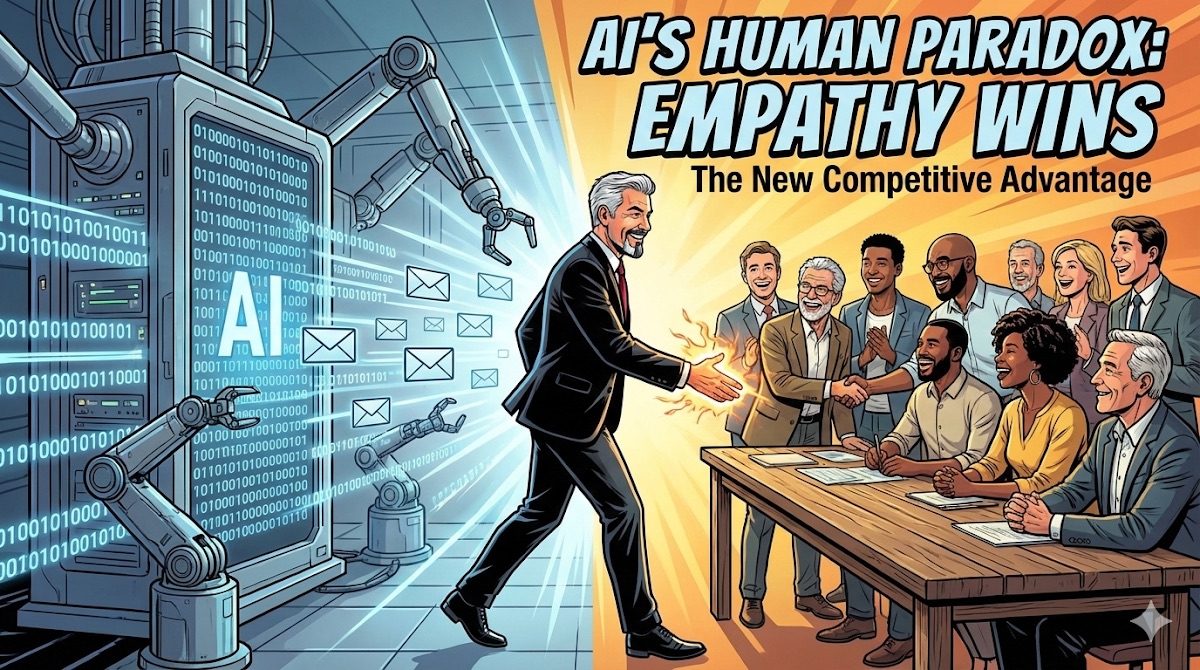
The AI Paradox is one of the most fascinating shifts in the modern business landscape. It's the idea that as we surround ourselves with more powerful technology, the "human element" doesn't get pushed aside—it actually becomes the most valuable thing you have to offer.
Think about it: when everyone has access to the same high-speed AI tools, the playing field for data processing and content generation levels out. If every salesperson can generate a "personalized" email in five seconds, that email loses its prestige. What becomes truly rare—and therefore incredibly valuable—is the genuine, messy, complex human connection that a machine simply can't replicate.
Why "Perfect" Efficiency Creates a Trust Gap
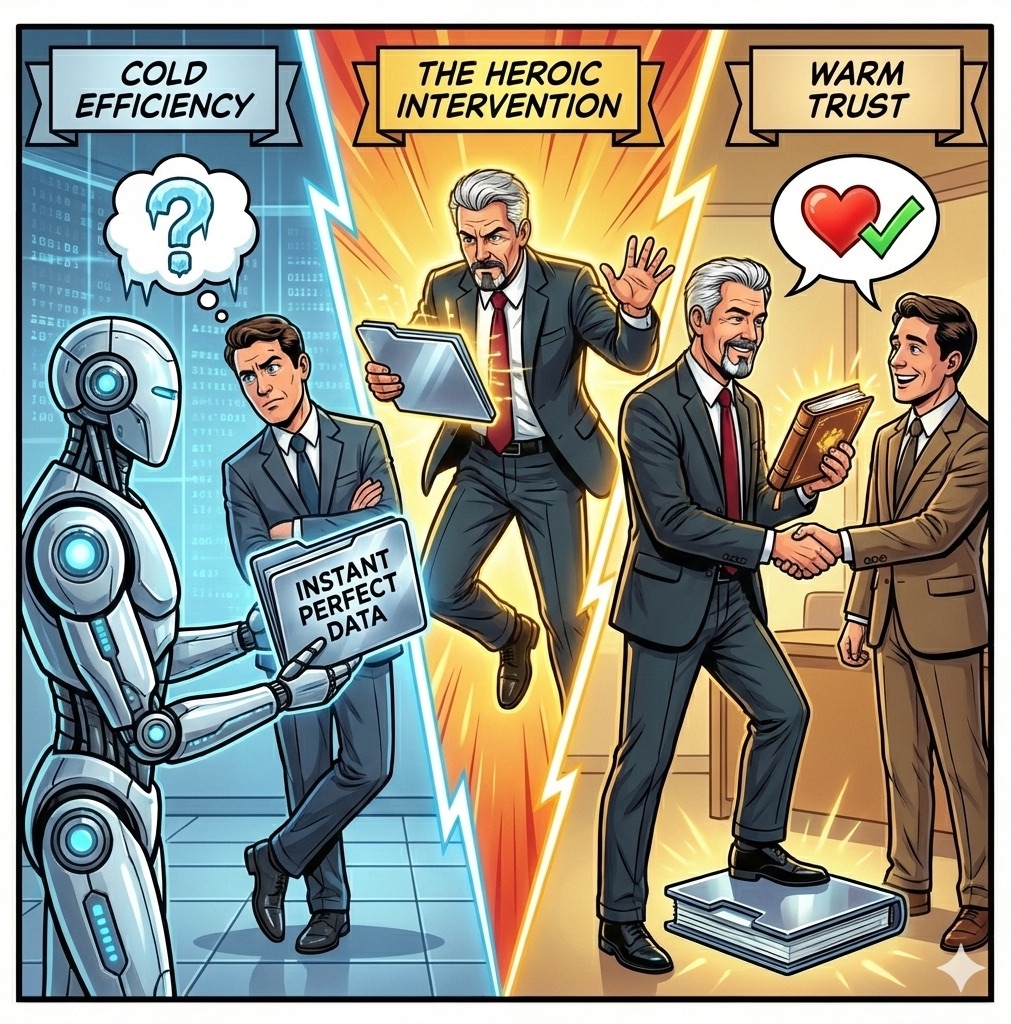
In the past, doing the "homework"—researching a client, analyzing their industry, spotting subtle trends—was a visible sign of dedication. It took hours, and buyers respected that effort because it showed you cared.
Now, buyers are smart. They know that AI can do that research in a heartbeat. This creates a Trust Gap. If a buyer suspects you're just hitting "generate" on a prompt and passing it off as your own insight, they don't feel valued; they feel like a data point in your CRM.
The paradox is that to prove you are trustworthy in an AI world, you have to use the time AI saves you to do the things AI cannot do:
- Navigating Ambiguity: AI is great at logic, but it struggles with the "unspoken." It can't feel the sudden shift in energy during a Zoom call when a specific stakeholder goes quiet.
- Moral Weight & Responsibility: A machine can suggest a path, but it cannot take responsibility for it. Clients want a human partner who will stand by the results and own the risks if things go sideways.
- Contextual Intuition: AI sees patterns in the past; humans sense possibilities for the future. You bring the "gut feeling" that turns a data-backed suggestion into a strategic breakthrough.
Using Automation to Scale Your Humanity
The trick isn't to work against AI, but to use it to "clear the deck" so your human strengths can shine.
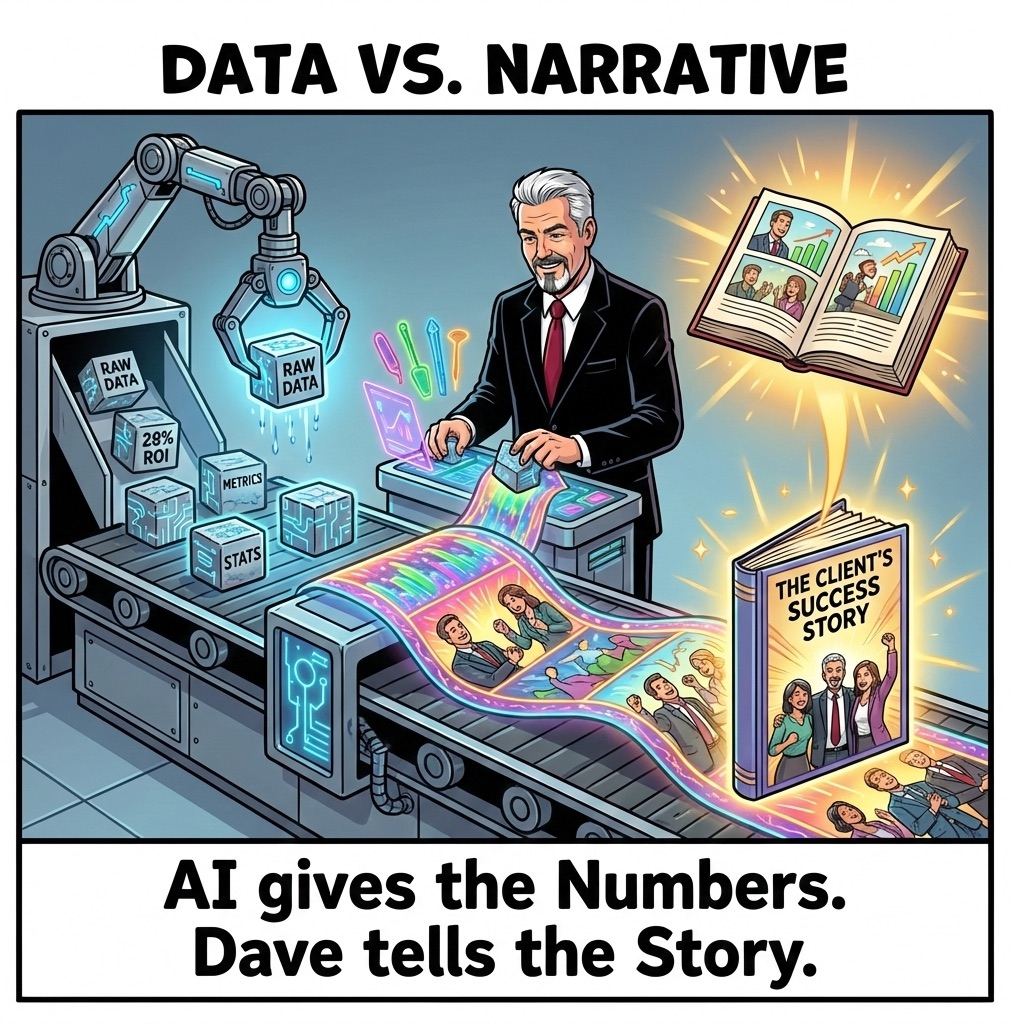
1. From Data Crunching to Narrative Building
AI can tell you that a prospect's ROI is predicted to be 28%. That's just a number—the "what." Your job is to provide the "so what?" You take those AI-generated metrics and weave them into a story that aligns with the client's personal legacy, their promotion goals, or their company's long-term mission.
2. Proactive Empathy
Instead of using AI to just send more messages, use it to send better ones. Use AI to monitor "health scores"—tracking when a client's usage or engagement dips—so you can pick up the phone and call them before they even realize they have a problem. That's using technology to facilitate a moment of real human care.
AI Exercise: The "Contextual Deep-Dive"
This exercise will show you how to use AI to find the "hidden" human needs behind a standard business problem. This helps you move past the data and into the person's actual reality.
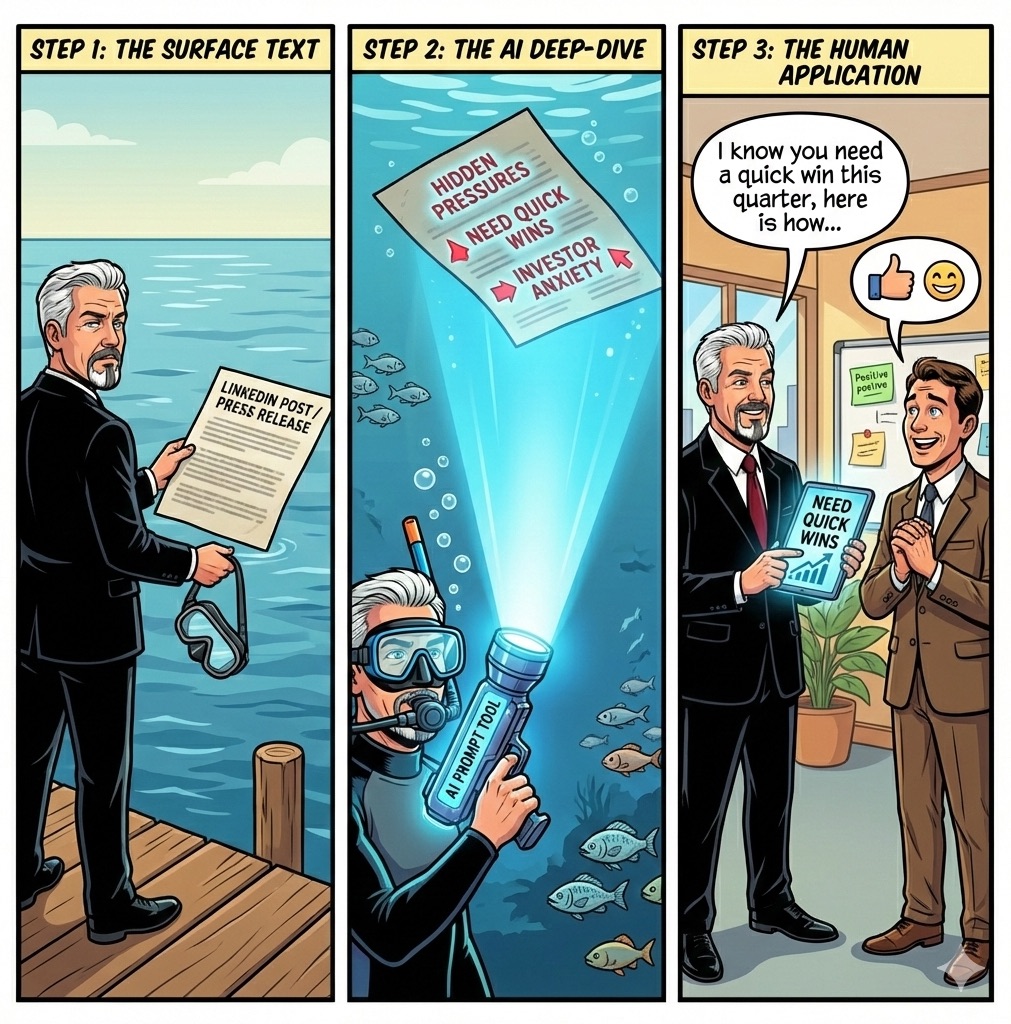
Goal: Uncover the emotional and strategic motivations of a decision-maker.
- Select a Prospect: Find a recent LinkedIn post, a press release, or an interview featuring a key decision-maker you are targeting.
-
The Prompt: Open a free tool like ChatGPT, Claude, or Gemini and enter this:
"I am preparing for a meeting with [Name/Title]. Based on this recent text: '[Paste text here]', analyze the likely 'hidden' pressures they are facing. What are three things they are probably worried about that they wouldn't put in a formal RFP? Suggest how I can ask a question that shows I understand these pressures without being intrusive."
- The Human Application: Look at the AI's suggestions. One might be "pressure to show short-term wins to appease investors." Use that insight to pivot your conversation from "here is my product" to "I know you're likely looking for a quick win this quarter; here is how we can fast-track the first phase to show immediate value."
The New Bottom Line
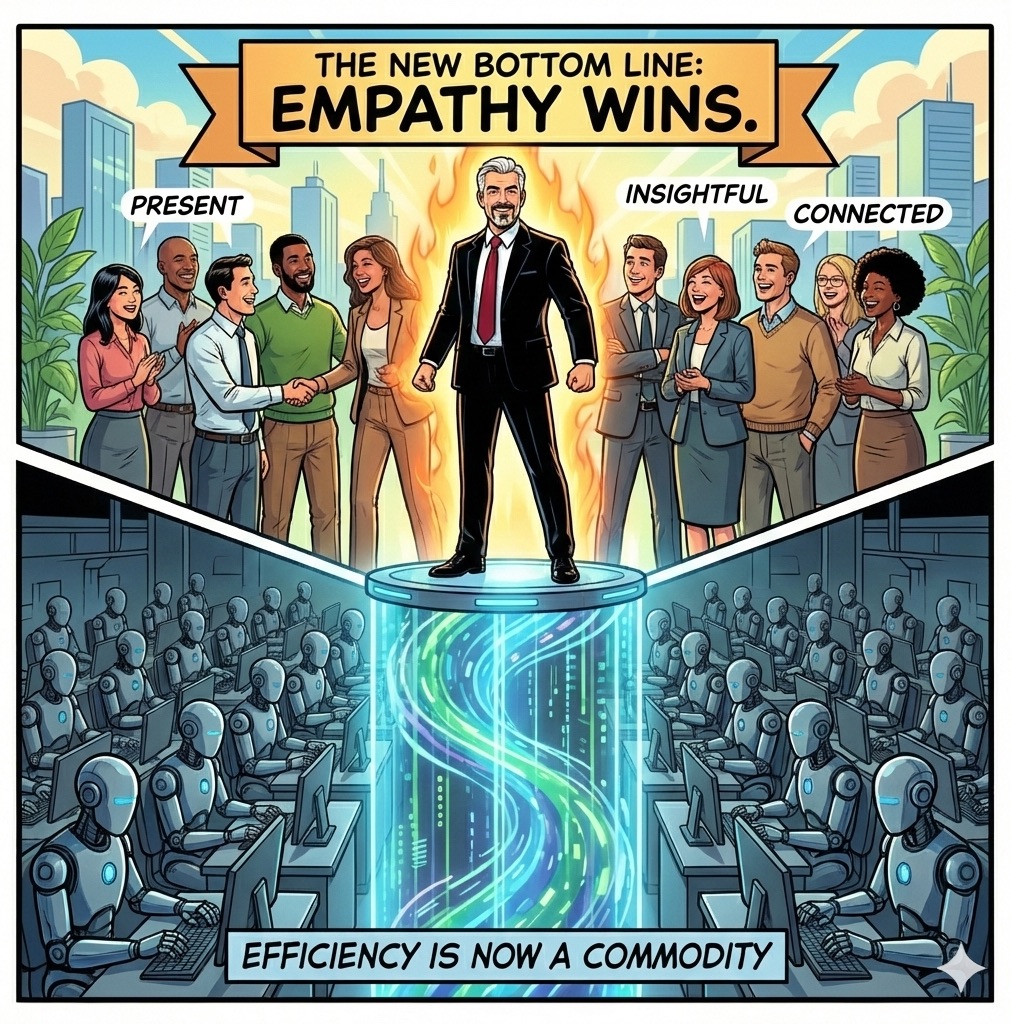
Efficiency is now a commodity. Empathy is the new competitive advantage. By automating the routine, you aren't becoming more like a machine; you are freeing yourself to be more fully human. The most successful professionals in the coming years won't be the ones who use AI the most, but the ones who use AI to give them the space to be more present, more insightful, and more connected to their clients.