
The "Un-Bot-able" Email: How to Stay Human in 2026
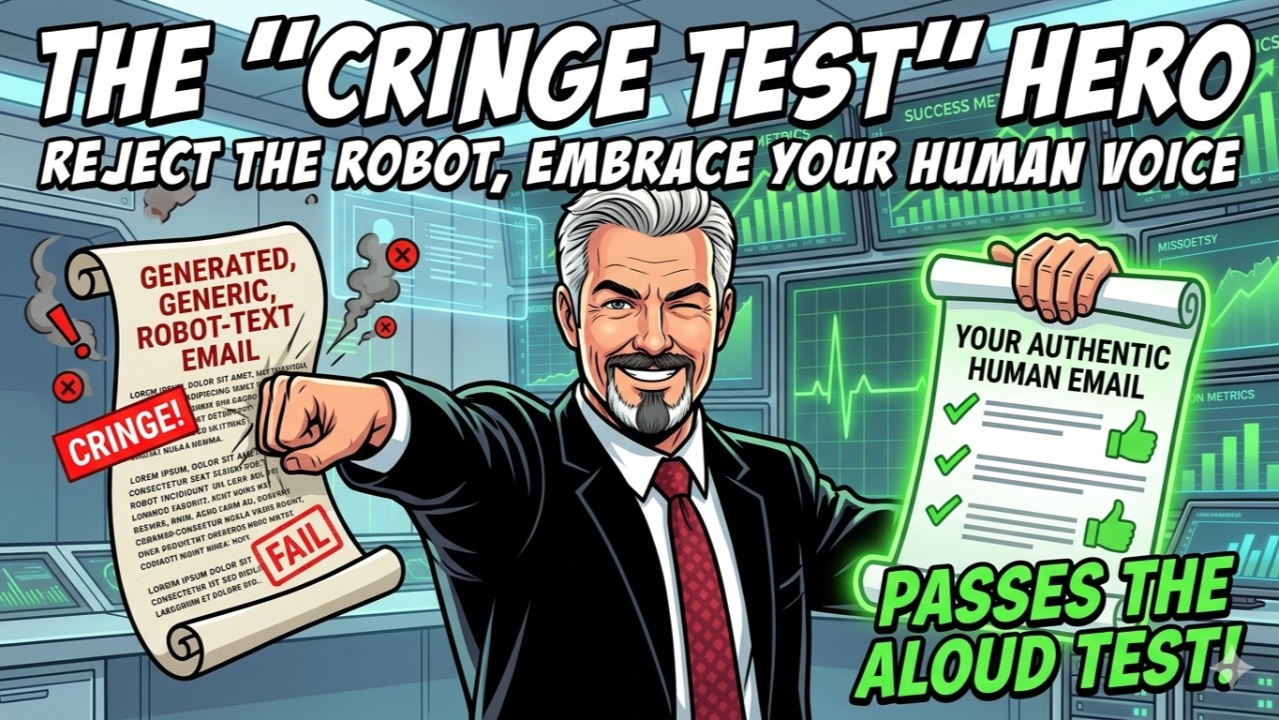
Let’s be honest: our inboxes have become a digital graveyard of "perfect" syntax. We’ve officially hit AI Fatigue. Every subject line is flawlessly capitalized, every paragraph is impeccably structured, and every closing is a professional platitude. Here is the irony of 2026: because everyone is using AI to sound professional, the most professional thing you can do is sound human, and not “sound AI”. Clients today don’t want a polished brochure sliding into their DMs; they want to feel like they’re talking to a peer. You don't need to ditch your AI tools to win you just need to use them to handle the logic while you provide the "soul." When an email is too perfect, it triggers a "spam" reflex in the human brain. To stand out, you need to inject a little bit of "messy" humanity.
The Secret to Staying "Un-Bot-able"
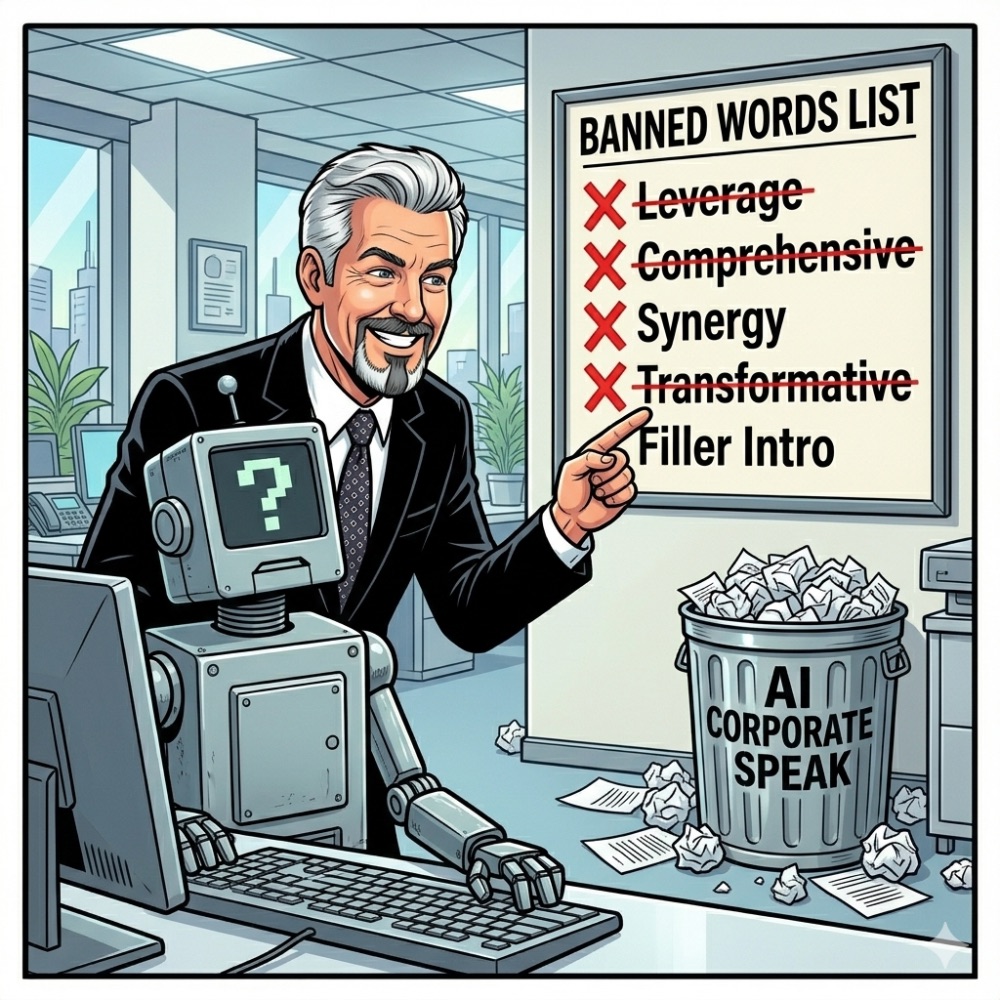
The first step in humanizing your outreach is mastering the "Negative Constraint" Prompt. Standard AI loves "throat-clearing" phrases like "I hope this email finds you well" or "In today’s fast-paced business landscape." To fix this, give your AI a list of Banned Words. Tell it: "Write this email without using leverage, comprehensive, synergy, or transformative. Avoid all introductory filler." This forces the AI out of its "corporate-speak" comfort zone and into a direct, conversational tone that actually resonates with a busy reader.
Once you've stripped away the fluff, you need to Inject a "Spicy Take." AI is programmed to be neutral and safe, but humans build trust through conviction. Before you ask the AI to draft, give it your unique opinion. For example, tell it: "I believe most SaaS onboarding is a waste of time because of [Reason]. Write the email from that perspective." A strong, slightly controversial opinion is something a generic bot would never generate on its own, instantly signaling to the buyer that there is a real person behind the screen.
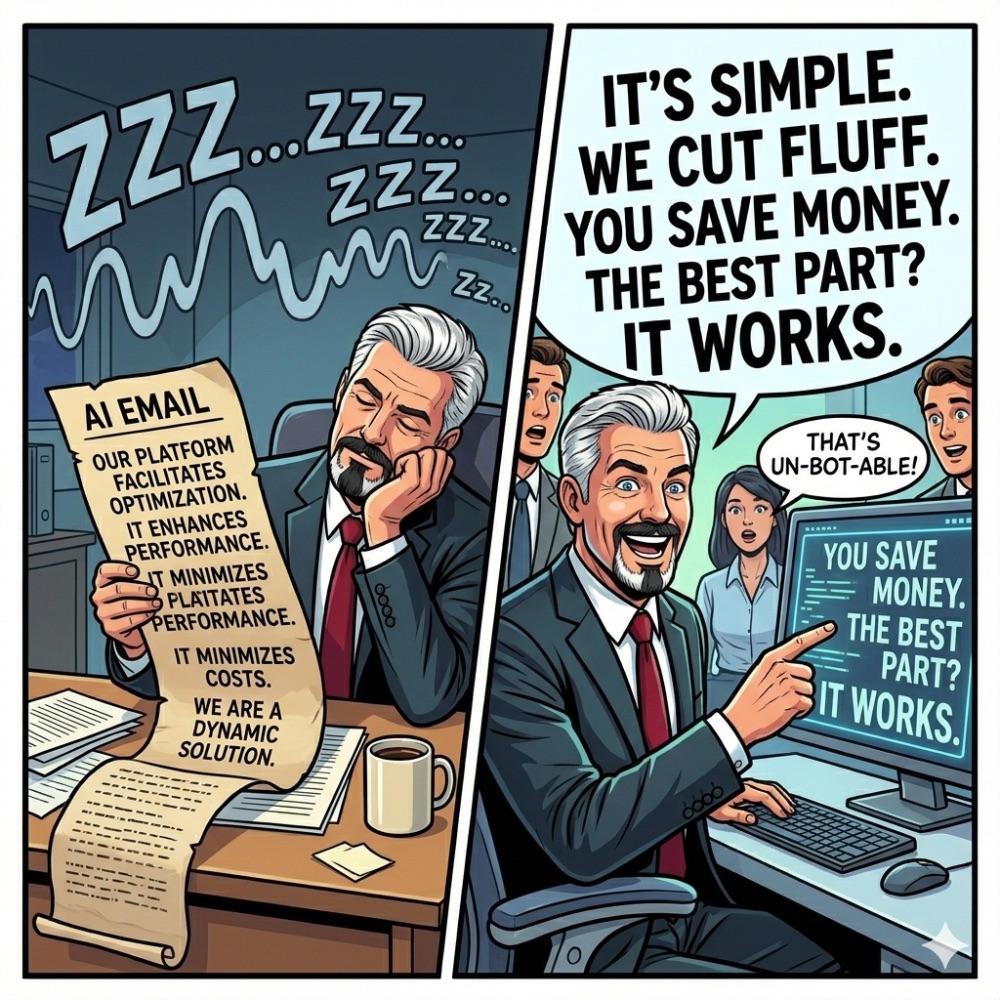
To keep the reader engaged, you must also enforce the "Sentence Variance" Rule. Bots love medium-length sentences that create a predictable, rhythmic "hum" that lulls readers to sleep. Break this pattern by telling your AI to use a mix of very short, punchy sentences and one longer, descriptive one. While an AI might write, "Our software helps you increase productivity and reduce costs," a humanized version should read: "It’s simple. We cut the fluff. You save money." This variety mimics natural human speech and keeps the prospect's attention sharp.
Finally, never forget the power of the "Personal PS." AI is great at the "business core," but it struggles with genuine, off-topic connection. Let the AI write the body, but always manually add a P.S. that references a specific detail, like a recent LinkedIn post they wrote or a shared hobby. Before you hit send, perform the "Cringe Test" by reading it aloud. If you wouldn’t say a sentence to a friend over coffee, delete it. If the draft uses stiff transitions like "Furthermore, it is important to note," swap them for a simple "Also..." or "The best part is…" Your ear is the best filter for robotic syntax.
AI Exercise: The "Un-Bot-able" Prompt Tutorial
Ready to see the difference? Try this exercise right now in any free LLM (like Gemini or ChatGPT).
The Control: Ask the AI: "Write a follow-up email to a prospect after a discovery call about our new cybersecurity platform." (Read it—it’ll likely be boring and generic).
The Result: Compare the two drafts. You'll notice the second version feels like it came from a partner, not a server farm.
The bottom line? Transparency used to be the gold standard, but in 2026, authenticity is the new currency. Use AI to handle the heavy lifting and brainstorming creativity, but use your personality to remain "Un-Bot-able" and “real”.
Images created with Google Gemini Nano Banana.